

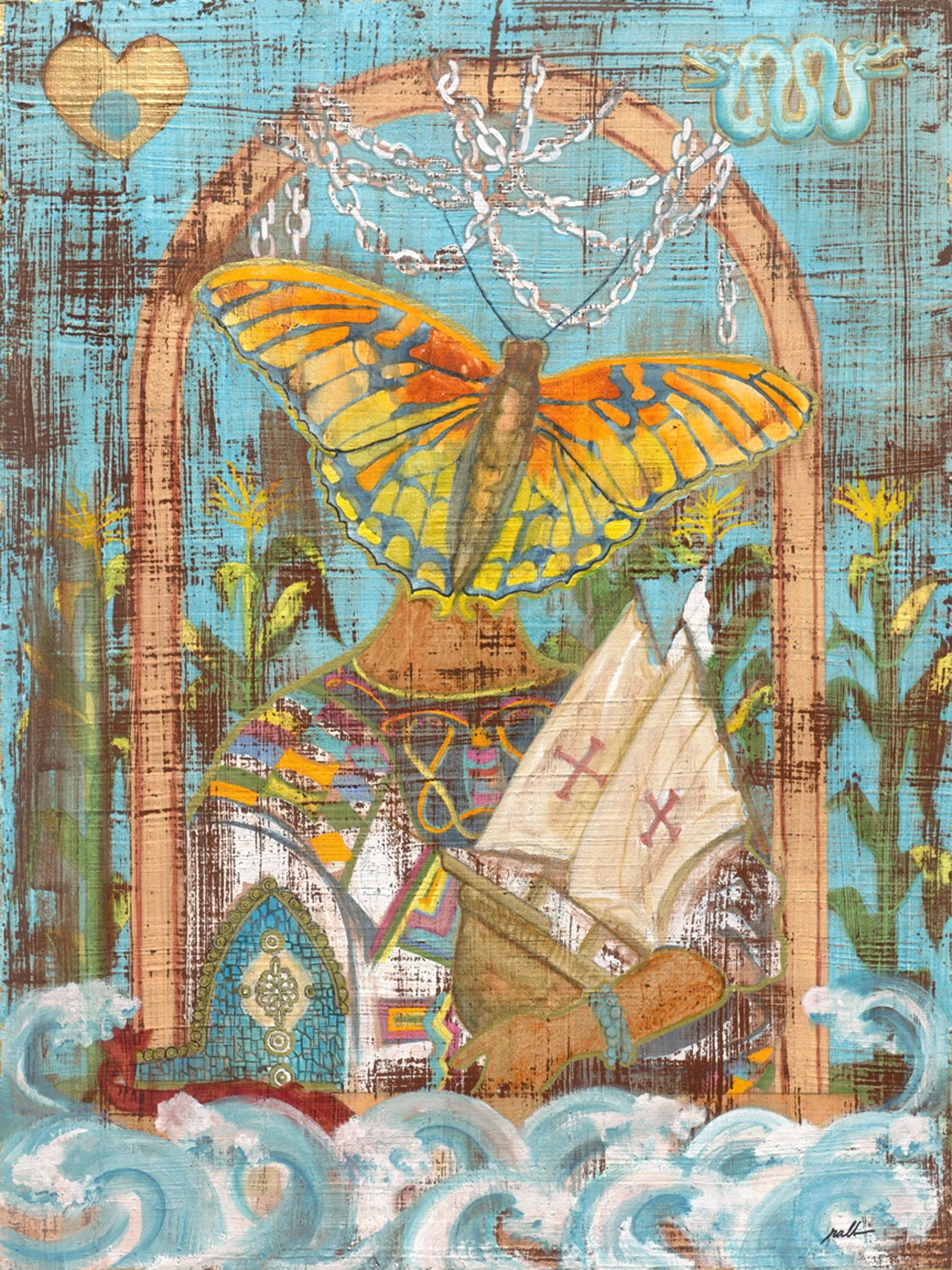
The story of Malinalli—known to history as La Malinche—is often reduced to a binary of betrayal or survival, yet her journey from a noble Nahua home to the center of the Spanish Conquest defies simple categorization. Malinalli was born to a wealthy Nahuatal family near Coatzacoalcos in the Gulf Coast region of Mexico. She was well educated and could speak both Nahuatl (the language of the Aztecs) and Chontal Maya. After her father died and her mother remarried, she was sold to traders to ensure her half-brother would inherit the family's lordship and property.
When Hernan Cortes led the Spaniards into Mexico, he is purported to have said “I and my companions know a sickness of the heart which can only be cured by gold.” Their desire for gold led to much bloodshed. After the Battle of Centla (aka the Battle of Tabasco) in 1519, the Maya gave the Spaniards a peace offering of 20 young indigenous women. Malinalli was one of these women who were distributed among the foreign conquerors. She was between 14 and 19 years old. Cortes soon learned of Malinalli's gift for language and made her his consort and interpreter. Her skills enabled Cortez to negotiate with leaders of several indigenous tribes.
In 1519, Malinalli was with Cortes and his men during trade negotiations in Cholula when she learned of a conspiracy by several tribes to overcome the Spaniards. She told Cortes of the impending ambush leading to the Massacre of Cholula and the deaths of thousands of people.
The iconography in this painting offers us the opportunity to meditate upon the difficult decisions we’ve made in our lives, urging us to move past justification toward a deeper acceptance of the impact our choices leave behind.
The Key to the Iconography
Window: The frame through which others view our behavior.
Hanging Chains: The limitations our experiences create in our minds and lives.
Copil (Nahuatl headdress): The life into which we were born.
Spanish Galleon: The life we cling to for survival in response to our experiences.
Huipil (traditional indigenous blouse): The persona we wear to distract ourselves and others from discovering who we are.
Mexican Silverspot Butterfly: The essence of self that rises above our circumstances.
Heart with Hole: The emptiness of our physical form that we attempt to fill with trivial pursuits.
Double-Headed Serpent: A Mesoamerican image symbolizing the merging of earth and sky and the duality of existence.
Water: The underlying emotions motivating our behavior.
